The Long February, doc, 79 mins, DCP, 5.1., DE/UA
Logline: February 2022, a month that seems to have no end.
Through private recordings and intimate testimonies, The Long February tells the story of the people of Bucha who lived through Russia’s invasion and occupation. A year after the liberation of the region, survivors revisit the first days of the war, revealing a story of loss, resilience and a February that never truly ended.
The film is now available for screenings — especially for educational institutions, initiatives and organisations of all kinds. In order to process your request as efficiently as possible, please fill out the following registration form. Journalistic enquiries are welcome.
👉 Cinema tour registration form (German): https://forms.gle/Lzjcj5DuBUN4h69V6
Email: kinotour[at]langer-februar.de
Once we have received your details, we will contact you personally with further information as soon as possible. Thank you for your interest.
This film is our pain, our wound, our truth. The world needs to see it.
Anatolii Fedoruk, Mayor of Bucha, said at the premiere of the film
Synopsis:
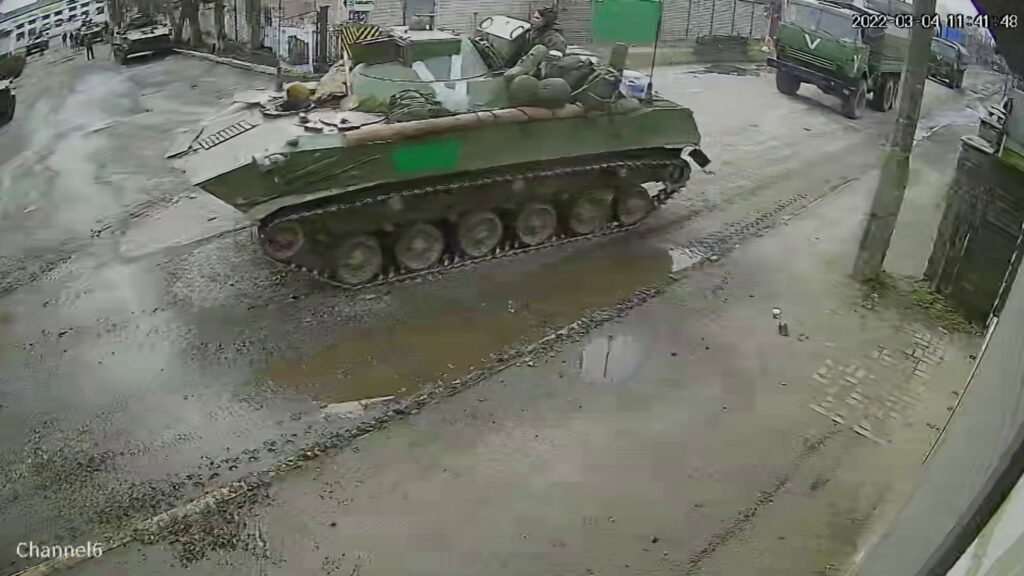
The Long February opens with an extended sequence of private recordings documenting the Russian airborne assault on Hostomel Airport on 24 February 2022. Told entirely through the perspective of local residents and without narration, the opening immerses the audience in the confusion, fear and overwhelming uncertainty of the first hours of Russia’s full-scale invasion. Rather than explaining the events, the film allows viewers to experience them as civilians did: suddenly, without warning, and with little understanding of what was unfolding around them.
Filmed one year after the liberation of the Bucha region, the documentary tells the story of the Russian occupation through the eyes of those who survived it. The Bucha region became known worldwide after evidence emerged of widespread killings of civilians by Russian forces during the occupation in the spring of 2022. Rather than focusing on military operations or battlefield strategy, The Long February examines the human consequences of these events and the lasting impact they continue to have on those who lived through them.
As Russian troops occupied Hostomel, Bucha and the surrounding towns, families found themselves trapped without electricity, running water or reliable communication. Survival became a daily struggle. Through deeply personal testimonies, the protagonists recount the first days of the invasion and weeks of occupation, the fear of shelling, the uncertainty of not knowing whether loved ones were still alive, and the impossible decisions they faced while trying to protect themselves and those around them.
The film is informative [and] emotional. […] It is one of those films that everyone should see who wants to gain a deeper understanding of the events of 2022 than the news reports convey.
commented Oleh kotsarev, DEUTSCHTE WELLE
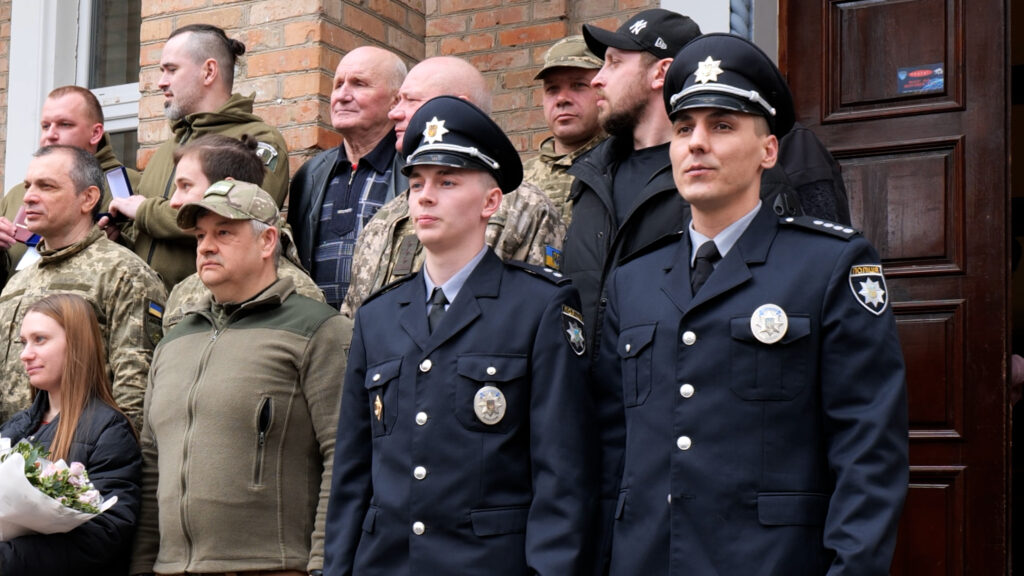
The documentary follows a diverse group of witnesses, including civilians, volunteers, police officer Vadym Subotin, who remained in occupied Bucha throughout the occupation.
Their individual stories reveal different perspectives on the occupation while forming a collective portrait of a community confronted with extraordinary violence. Several protagonists share their experiences publicly for the first time. Among them are survivors who lost husbands, siblings, close relatives, friends and neighbours during the occupation, illustrating the devastating human cost behind the events that made Bucha a symbol of the war.
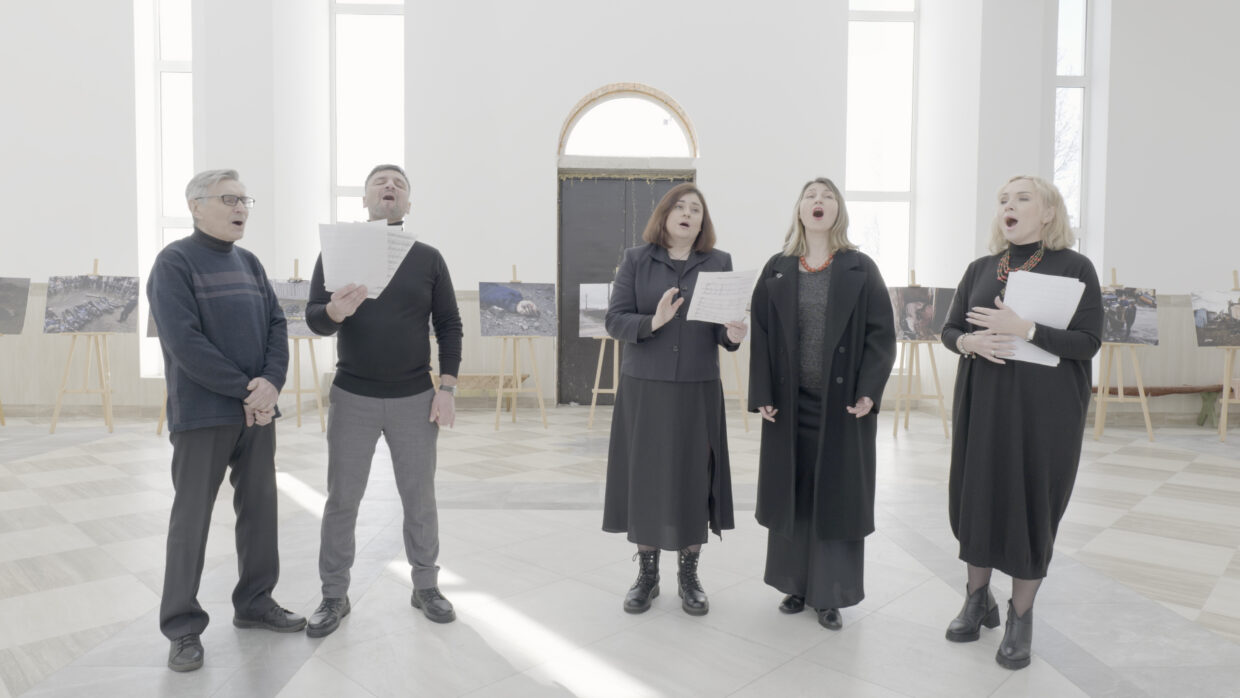
Music also becomes part of the narrative, as protagonist Nataliia Fitkevich and her choir contribute to the film’s soundtrack, reflecting the role of culture in preserving hope, dignity and identity in times of war.
Director Michael Stadnik’s family ties to the neighbouring city of Irpin provided him with exceptional access to the region. He earned the trust of people who had never before shared their experiences publicly, allowing the documentary to preserve testimonies that might otherwise have remained unheard. Combined with private archival footage recorded during the first weeks of the invasion—much of it previously unseen—the film presents an intimate perspective that reaches beyond conventional news coverage.
Rather than ending with the liberation of Bucha, The Long February follows its protagonists as they continue rebuilding their lives. The documentary explores how survivors cope with trauma, grief and profound personal loss while also revealing the remarkable resilience that allows them to move forward. By allowing time to pass before the interviews were conducted, the film moves beyond immediate reactions and offers a deeply reflective portrait of remembrance, healing and endurance.
By bringing together previously untold testimonies with intimate archival footage, The Long February becomes more than a chronicle of the occupation. It is a film about memory, resilience and the invisible aftermath of war. The title reflects the film’s central idea: while the occupation of Bucha came to an end, the war did not. For the people of Bucha—and for millions of Ukrainians—the February in which Russia’s full-scale invasion began has never truly ended. The Long February is their story.
Choir of St. Andriy’s Church, contributed to the soundtrack
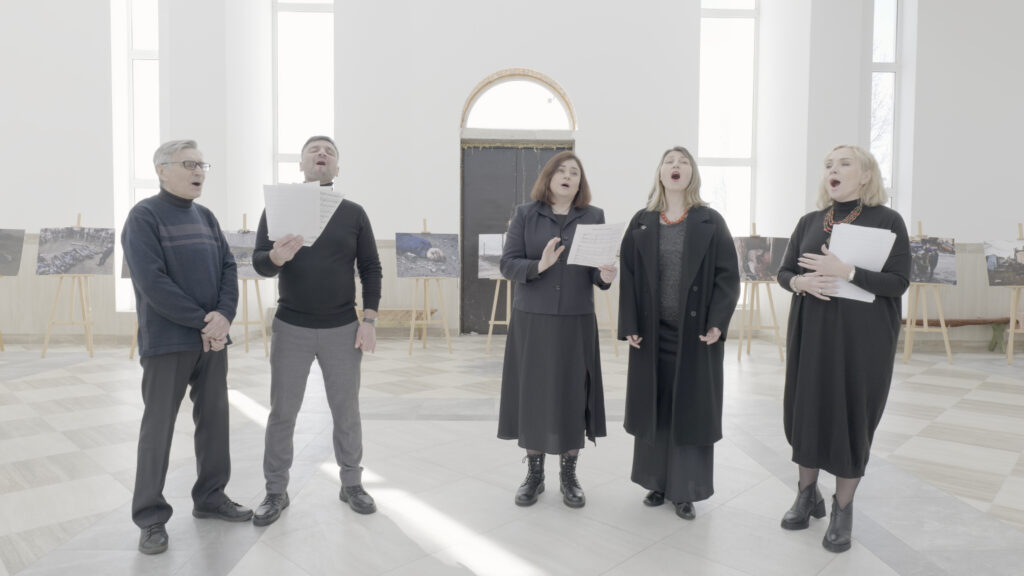
Especially for this film, the choir sang in remembrance of the victims (pictured on the right). As mentioned before, several songs were contributed to the soundtrack. During the final shoot, a beam of light appeared in the gap between the singers—which symbolises the missing singer—an unplanned moment that gave the scene a sense of divine intervention.
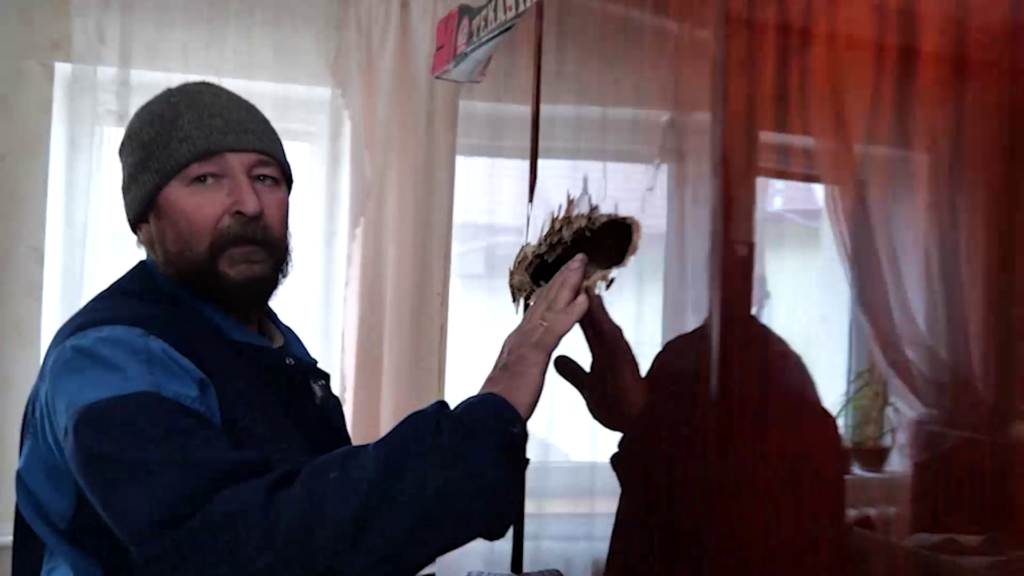
Director’s comment:
This project was particularly important to me, and the production felt especially close to my heart. My own relatives had to flee from Irpin, the neighboring town of Bucha, and were in immediate danger. Personal contacts played a role in the production, as I was able to bring in protagonists who had not spoken to media before, such as the police officer Vadym Subotin.

The post-production was funded by Hessen Film & Medien, the Film fund of the federal German State of Hessen.
The film is currently seeking for an international distributor. Distributors can request a screener link by mail: info[at]michael-stadnik[dot]de
Further film stills:
Premiere – simultaneously in Germany and Ukraine
The premiere took place on International Human Rights Day (10th of December, 2025).
The event was held simultaneously at the Frankfurt Film Museum and in a cinema in Bucha and was linked via a video call. Speeches where held by dignitaries, such as the Mayor of Bucha, Anatolii Fedoruk; the Vice-Speaker of the German Parliament Omid Nouripour; the Ukrainian Consul Taras Zholubak and the Head of Cultural Affairs of Frankfurt Dr. Ina Hartwig. Both events were very well attended by the public in Germany and Ukraine. See pictures below:
Follow me on Youtube and Instagram to not missout on news on this project.


